Chemical peels are one of the most reliable ways to dramatically improve your skin’s texture, tone, and overall clarity. They work by removing damaged surface layers to reveal the brighter, smoother, and healthier skin underneath. What makes them a mainstay in medical aesthetics? They’re simple in concept but highly customizable in practice, meaning they can be tailored to almost any skin concern.
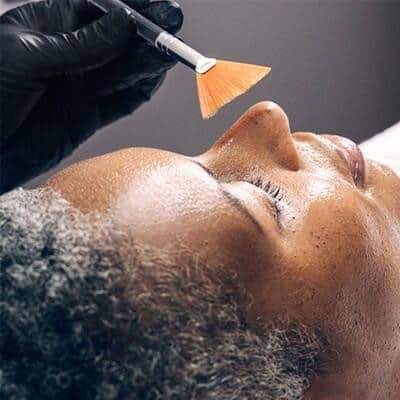
Think of a chemical peel as highly controlled exfoliation. A customized solution is applied to your skin to remove a thin, predictable layer of damaged cells. This process is all about control: the goal is not to aggressively strip the skin, but to uniformly remove a specific depth of cells so the skin can heal properly and deliver consistent, fresh results.
Chemical peels are versatile and effective, addressing a broad spectrum of skin concerns, ranging from minor dullness to more persistent issues such as:
- Fine lines and early signs of aging
- Acne, oily skin, and acne scarring
- Uneven skin tone, pigmentation, and sun damage
- Dull or rough skin texture
Not All Peels Are the Same: Choosing Your Depth
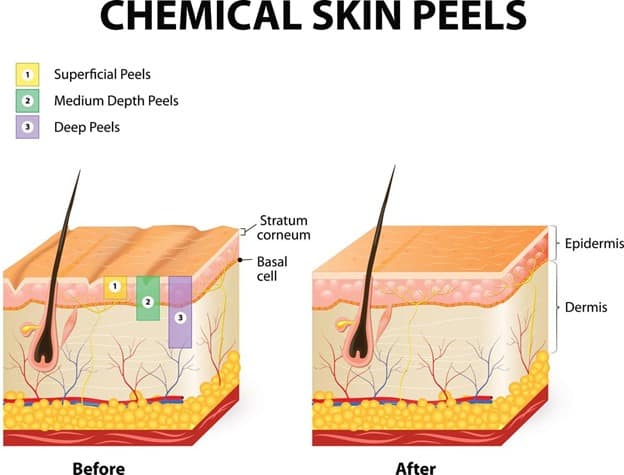
The treatment is customized based on how deep the solution needs to penetrate. Peels are generally categorized by depth, which dictates the results and the downtime:
- Superficial Peels: These are the lightest option, working only on the outermost layer (epidermis). They are ideal for mild acne, slight dullness, or routine maintenance, offering little to no downtime. Common ingredients: Lower concentrations of glycolic acid, lactic acid, or salicylic acid (e.g., 10–50%).
- Medium Peels: These penetrate beyond the epidermis into the upper dermis and deliver more noticeable correction. They are often used for pigmentation concerns, acne scarring, and fine lines. Expect visible peeling and a few days of downtime. Common ingredients: Higher concentration glycolic acid (up to 70%), salicylic acid (>30%), or TCA (30–50%).
- Deep Peels: Reaching further into the dermis, these are reserved for more significant sun damage and deeper wrinkles. They require careful monitoring and longer recovery. Common ingredient: High-concentration TCA (>50%).
A Note on Jessner’s Solution
Jessner’s Solution (a mix of 14% each of salicylic acid, lactic acid, and resorcinol) can be used alone as a superficial to medium peel or, crucially, as a primer to break down the outermost skin layer. This allows other peeling agents to penetrate more evenly and work more effectively.
What to Expect: During & After
During the session, it’s normal to feel mild warmth, stinging, or tingling. Afterward, your skin will likely be tight and appear red, and the peeling process usually starts within a few days. These are all expected effects and signs that your skin’s natural renewal process is active.
While chemical peels are safe when performed appropriately, proper assessment and aftercare are essential. The likelihood of potential side effects—like redness, irritation, or post-inflammatory pigmentation—increases with peel depth, which is why careful technique is key.
A careful patient assessment is vital, as peels aren’t always recommended. You should postpone a peel if you have:
- Active skin infections (bacterial, fungal, or viral)
- Open wounds or a compromised skin barrier
- Recent sunburn or significant UV exposure
- Active cold sores (herpes simplex) without prophylaxis
Patients with darker skin types may also require more cautious selection and pre-treatment to reduce the risk of post-inflammatory pigmentation.
Chemical peels are a foundational and adaptable treatment for improving skin quality. By matching the right strength and ingredient to your specific concern, they offer a predictable path to visible results and continue to be a core part of many clinical skincare approaches.